RegTech Horizon
Showcase directory for Top Regulatory StartUps

What I did
The problem
Ready to build something exceptional?
Let's discuss how custom software can accelerate your business outcomes.

Loading

Let's discuss how custom software can accelerate your business outcomes.
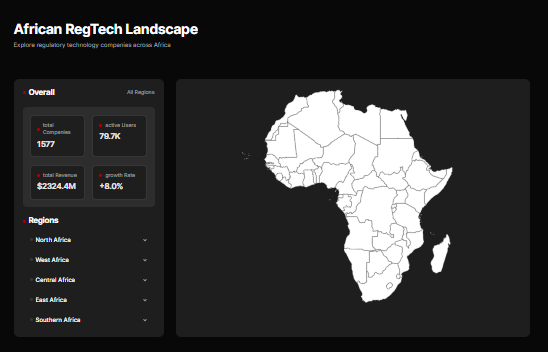
RegTech Africa needed a way to migrate from physically documented handouts of the top 100+ regulatory startups in Africa. It is often fragmented across multiple systems, spreadsheets, and manual workflows. As compliance requirements evolved, as the number of companies on the list grew, and as companies restructured internally, RegTech Africa faced increasing operational complexity while needing to maintain accuracy, auditability, and security.
The objective was to build a centralized platform that showcases these companies and efficiently manages compliance information, reducing manual effort and improving visibility across regulatory processes, while giving these startups autonomy over their information.
The solution also needed to accommodate multiple user roles and provide secure access to sensitive regulatory information.
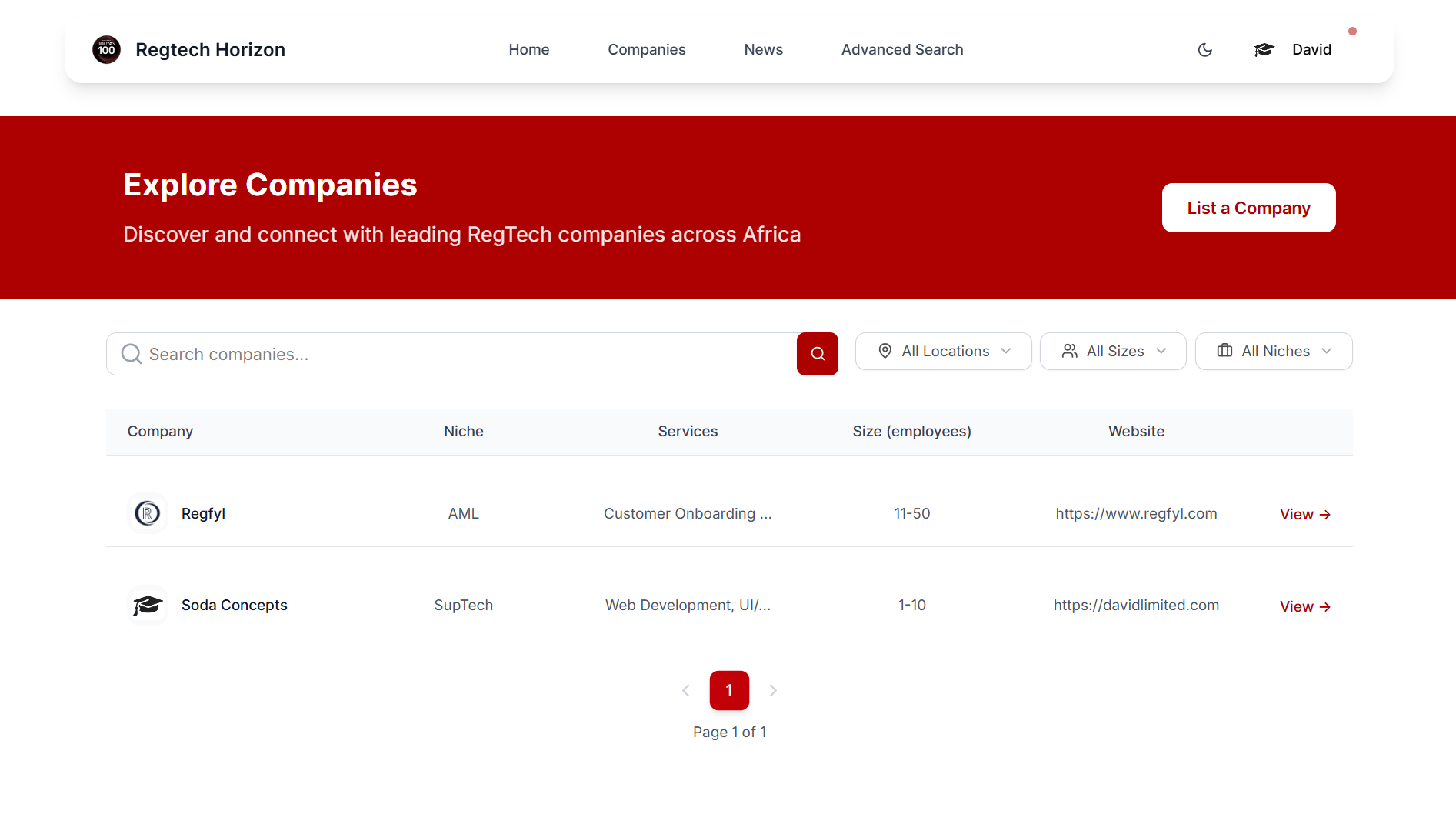
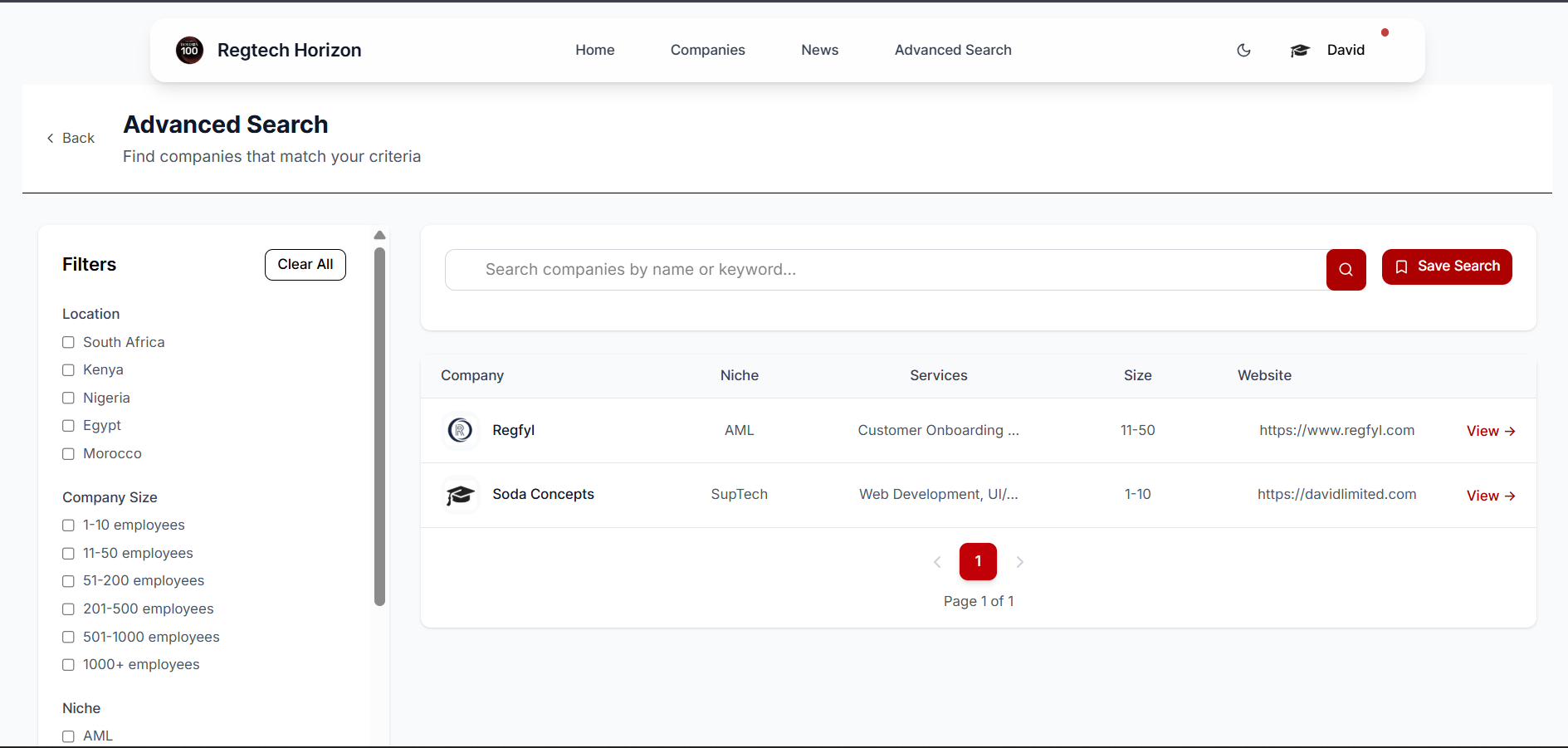
RegTech Horizon was designed as a modular web platform that serves as a directory and centralizes compliance workflows within a single application.
The frontend provides an intuitive interface for startups to manage their information, with an approval flow for compliance officers and administrators, while the backend exposes secure REST APIs responsible for user management, authentication, workflow orchestration, and data persistence.
The architecture emphasizes maintainability, security, and scalability, allowing new compliance modules to be introduced with minimal impact on existing functionality.


Designed the application around modular services to separate authentication, company profiling and profile management, compliance workflows, reporting, and administrative functionality. This reduced coupling and simplified long-term maintenance.
Implemented role-based authorization to ensure users only access information relevant to their responsibilities. Security considerations influenced both API design and frontend navigation.
Designed REST endpoints using consistent resource patterns, improving maintainability while making the platform easier to extend as regulatory requirements evolve.
Managing multiple user roles
Implemented Role-Based Access Control (RBAC).
Allowed administrators, companies, compliance officers, and operational users to access only the resources appropriate for their responsibilities.
Supporting future regulatory modules
Designed the backend using modular service boundaries.
New functionality can be introduced without requiring major architectural changes.
Protecting sensitive compliance data
Implemented authentication and secure server-side API authorization.
Reduced the attack surface while ensuring secure access to protected resources.